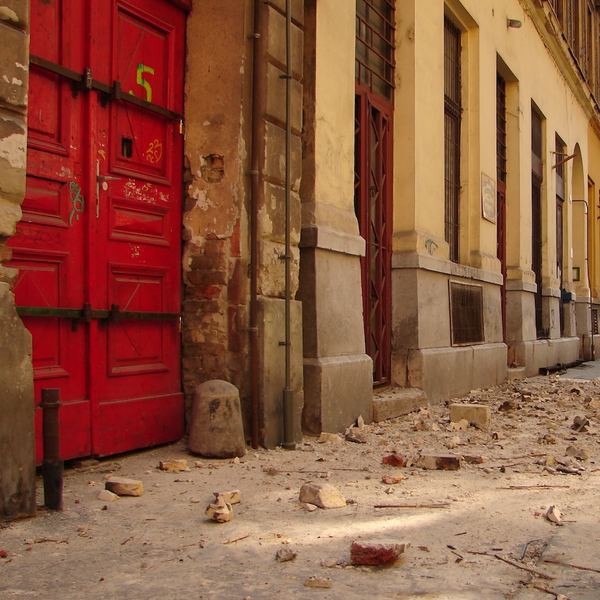
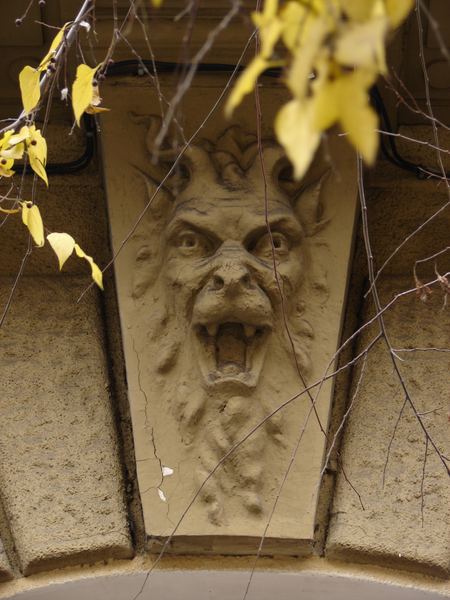
The project began in Budapest in 2006 as a personal obsession: walking the city's districts and noticing the faces — human, animal, mythological — gazing down from above doorways and windows of nineteenth-century apartment buildings, silent and still while the street moved beneath them. Kőarcok, the project's original Hungarian name, means simply "stone faces."
Most people pass them without looking up. That is part of what makes them so striking when you do: a face that has watched over the same entrance for a hundred years, patient and unmoving, meeting your eyes for a moment before you move on. There is something in their silence — the way they observe without being observed — that is impossible to forget once you start noticing them.
Each face in the collection is photographed in situ — in natural light, in the context of its street and building. No studio lighting, no cropping away from the wall. The stone and the city are inseparable.
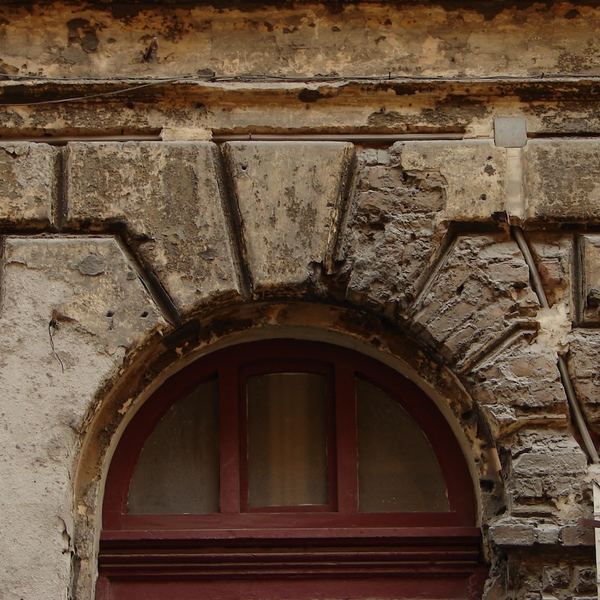
Many of these faces were not carved from stone at all. The ornamental figures on turn-of-the-century Budapest buildings were typically made from stucco — manufactured in workshops, produced in moulds, fixed to façades with nails and screws. Many of these buildings have seen no renovation in decades. The stucco deteriorates, faces crack and fall. When a building is redeveloped, the ornament is rarely preserved. Each year the collection becomes, in part, a record of what no longer exists.
The collection is ongoing. New faces are added as they are found, in Budapest and wherever else the streets reveal them.